Facade waterproofing · Kingston to Hudson
Exterior wall and facade waterproofing from Kingston to Hudson
Most leaks inside a Hudson Valley building never start in the middle of a wall—they slip past split window caulk, open parapet copings, missing kickout flashing or unsealed transitions behind the cladding. We track down above-grade water entry and seal the building envelope so walls stay dry through river-valley storms and winter freeze-thaw.
Book spring work now. Winter assessments and estimates available.
Updated November 2026
Short answer
Above-grade facade waterproofing stops wind-driven rain and meltwater from entering exterior walls across the Mid-Hudson Valley, from Kingston and Saugerties over to Rhinebeck, Catskill and Hudson. Our own crews cut out failed perimeter and control-joint sealants, install sheet and fluid-applied air-and-water barriers during re-cladding, repair through-wall and parapet flashings, damp-proof exposed foundation walls above grade, and apply breathable masonry or elastomeric coatings.
Key facts
- Service area
- Kingston, Rhinebeck, Red Hook, Saugerties, Woodstock, New Paltz, Hudson and Catskill, and the rest of the mid-Hudson Valley.
- Season
- EIFS and stucco finishes need about 40 °F and rising, with no freezing for 24 hours. In the Hudson Valley that means spring through late fall.
- Who does the work
- Our own crews, from The Dom Construction Group LLC.
- Insurance
- General liability, umbrella and workers' compensation insurance; certificates on request.
- Estimates
- Free. Start with 3–5 photos by text, or use the form.
- Reply
- We reply within one business day, Monday to Friday.
Where water actually enters Hudson Valley facades
Wind-driven rain sweeping up the Hudson River valley and winter freeze-thaw swings between 45 °F afternoons and single-digit nights rarely push water straight through a sound wall plane. Almost every leak we trace from Kingston and Saugerties over to Rhinebeck, Catskill and Hudson enters at a joint, edge or material change where movement has opened a path. Above-grade facade waterproofing focuses on those vulnerable transitions:
- Split window, door, louver and control-joint sealants where aged caulk has hardened and pulled loose from brick, stucco, metal frames or EIFS returns
- Open parapet walls and coping seams on flat-roofed commercial and downtown Main Street buildings that channel rainwater straight down inside hollow masonry or stud cavities
- Missing or undersized kickout, head and sill flashings where pitched roofs, porch canopies, decks or stone water tables meet vertical walls
- Weather-worn stucco, porous brick and exposed above-grade foundation bands that drink in splashback along sidewalks and spall when trapped moisture freezes
Our waterproofing scope covers exterior walls, parapets and exposed foundation surfaces above grade. We do not install interior basement sump pumps or excavate below-grade footings; instead, we stop rain and meltwater on the outside of the building envelope and tie cleanly into existing roof counterflashings and coping lines.
Sealant joints, metal flashing and parapet detailing
Smearing new caulk over cracked silicone or urethane buys less than a season before the joint tears open again. Proper joint waterproofing starts with cutting out failed sealant completely, cleaning mortar dust or oxidized residue off the joint walls, and setting closed-cell or soft rod stock at the right depth. Sizing the joint for two-sided adhesion—rather than letting sealant stick to the back of the slot—allows low-modulus silicone or polyurethane sealant to stretch across wide summer-to-winter temperature shifts without cohesive splitting.
Where roof lines, window heads, band boards or canopies meet a facade, sealant alone is only a backup. Gravity has to carry bulk water clear of the wall. We fabricate and tuck hemmed metal drip edges, kickout diverters, sill pans and sealed parapet coping splice plates so runoff sheds outward instead of tracking behind cladding. When years of hidden leakage have already softened wood sheathing or delaminated finishes, we handle localized EIFS repair, stucco & plaster rebuilds or stone veneer remediation at the same time before sealing the perimeter.
Air-and-water barriers and breathable wall coatings
When an older building is stripped for new EIFS & re-cladding or aluminum panels, real waterproofing happens on the structural backup wall before any finish goes up. Our mechanics apply fluid-applied air-and-water barrier membranes and self-adhered flashing tapes across plywood, OSB, exterior gypsum sheathing or concrete block, wrapping rough openings and transition shelves into one continuous drainage plane.
On exposed facades that stay in place, keeping liquid rain out has to be balanced with letting interior water vapor escape. Dense, non-breathable paints trap winter vapor behind the film until brick faces pop or plaster blisters. We match protective treatments to the wall assembly: clear, penetrating siloxane water repellents on brick and natural stone that shed driving rain without leaving a glossy film; vapor-permeable acrylic or elastomeric coatings on sound stucco and EIFS that bridge fine craze cracks; and heavy-bodied damp-proofing coatings along exposed above-grade concrete foundation walls.
Our own crews and scaffold on multi-story walls
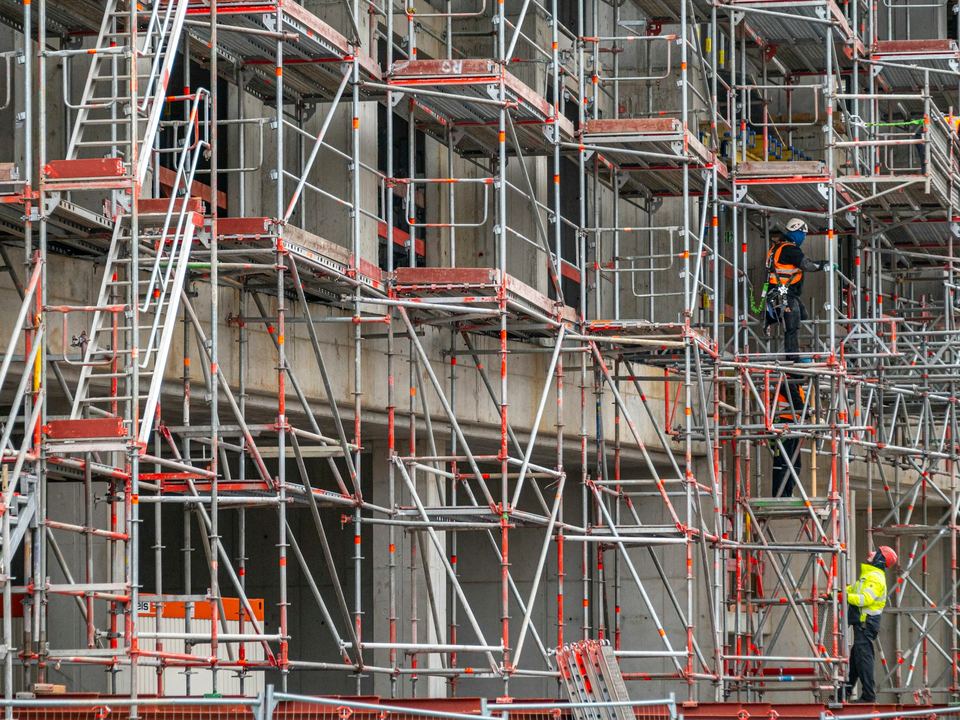
Hudson Valley EIFS & Exterior Restoration is the local division of The Dom Construction Group LLC (headquartered at 401 New Karner Rd, 3rd Floor, Unit 301, Albany NY 12205), operating with our own field crews and roughly 19 years of team experience across EIFS, stucco, masonry and protective coatings. Because we own and erect our own supported pipe scaffolding, our mechanics prep joints, set parapet flashings and roll coatings from steady, level decks on two- and three-story elevations rather than rushing off ladders. Every job is backed by general liability, umbrella and workers' compensation insurance—whether we are sealing a single leaking commercial elevation or folding waterproofing into full exterior restoration.
Above-grade facade waterproofing questions
Does your waterproofing service cover leaky basements or below-grade foundations?
No—our work focuses strictly on exterior walls, facades, parapets and exposed foundation surfaces above grade. We stop wind-driven rain and meltwater from entering through perimeter joints, window heads, copings, cladding transitions and porous masonry walls, rather than excavating below-grade footings or installing interior basement drainage systems.
Why not seal leaking brick or stucco walls with thick exterior house paint?
Standard house paints form a tight film that traps interior moisture vapor behind the surface, which leads to peeling paint, blistered plaster and freeze-spalled brick faces during Hudson Valley winters. We match breathable products to each wall—clear penetrating siloxane water repellents for brick and stone, and vapor-permeable acrylic or elastomeric coatings for sound stucco and EIFS.
Can you apply fresh caulk right over old, cracked window sealant?
Skimming a thin bead over aged, split caulk fails quickly because the new material bonds across a dirty gap without room to flex. Lasting joint waterproofing requires cutting out the old sealant cleanly, prepping both joint edges, installing closed-cell or soft backer rod for proper two-sided adhesion, and tooling low-modulus urethane or silicone sealant.
How do you trace leaks on flat-roofed commercial buildings with parapet walls?
On downtown storefronts and commercial plazas, parapet leaks frequently start at unsealed metal coping splices, cracked mortar caps or open roof-to-wall counterflashing rather than the windows below. We inspect the coping seams, parapet back walls and through-wall flashings from the top down so water is stopped at its actual entry point.
Send photos of the leak path or stained wall
A wide shot of the elevation and a close-up of nearby windows, roof lines or parapets help us see how water is getting in.
Exterior work that pairs with waterproofing
- Exterior restoration
Combine sealant replacement, flashing upgrades, masonry patching and coatings in one coordinated scope.
- EIFS repair
Cut out wet sheathing, rebuild soft Dryvit- or Sto-type lamina and add missing kickout diverters.
- Stone veneer
Fix hidden water intrusion, missing weep screeds and cracked mortar behind stone facades.
Tracking a stubborn wall leak? Call or text (845) 443-7902.
Book spring work now. Winter assessments and estimates available.