Facade restoration · Hudson Valley
Exterior facade restoration in the Hudson Valley
When a village storefront, office building or multi-material home leaks in three places at once, splitting the work across separate trades rarely stops the water. We take the whole elevation in one coordinated scope.
Book spring work now. Winter assessments and estimates available.
Updated November 2026
Short answer
When a commercial building, village storefront, or larger Hudson Valley home has leaks and wear across several materials, we handle the full elevation under one scope. Our own crew sets pipe scaffold, repairs EIFS, stucco, plaster, and stone veneer, installs metal flashings and perimeter sealants, and applies protective coatings once weather reaches 40 °F and rising.
Key facts
- Service area
- Kingston, Rhinebeck, Red Hook, Saugerties, Woodstock, New Paltz, Hudson and Catskill, and the rest of the mid-Hudson Valley.
- Season
- EIFS and stucco finishes need about 40 °F and rising, with no freezing for 24 hours. In the Hudson Valley that means spring through late fall.
- Who does the work
- Our own crews, from The Dom Construction Group LLC.
- Insurance
- General liability, umbrella and workers' compensation insurance; certificates on request.
- Estimates
- Free. Start with 3–5 photos by text, or use the form.
- Reply
- We reply within one business day, Monday to Friday.
How we sequence a full facade restoration
Handling water-entry details, structural substrates and surface finishes in the right order so every repair holds.
Elevation walk-through and moisture mapping
We inspect transitions across EIFS, stucco, plaster, stone, windows and roof edges to map every active leak path.
Safe access and selective cut-outs
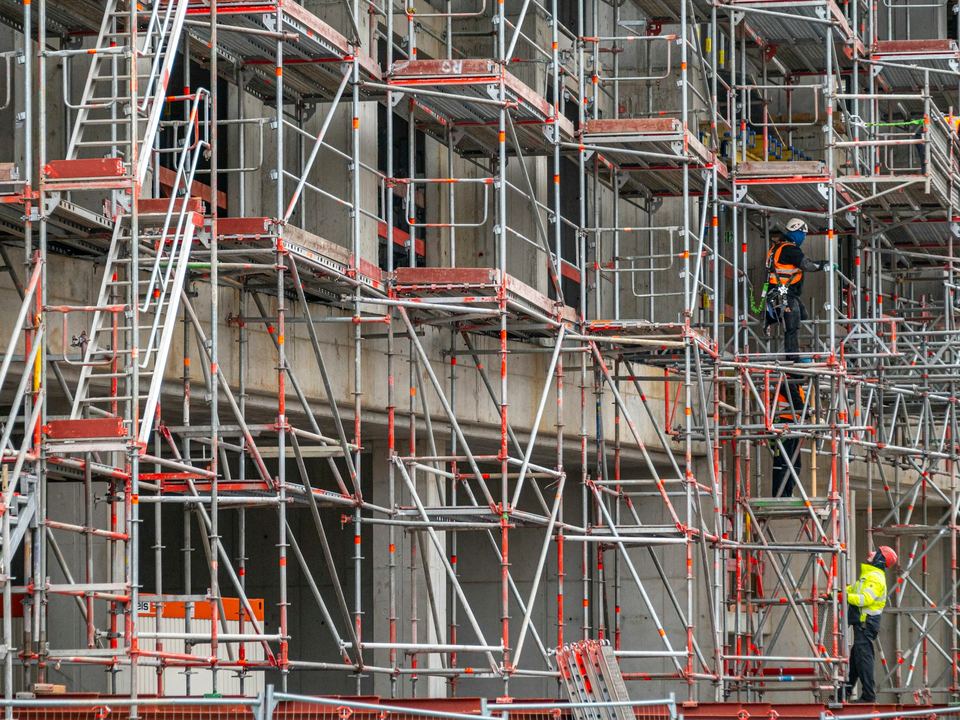
Our crew sets pipe scaffold or stages lifts, masks walkways and openings, and opens deteriorated cladding back to sound backup.
Flashings, substrate rebuilds and joint sealants
Metal kick-outs, drip caps and new sheathing go in first, followed by rebuilt wall coats and backer-rod perimeter sealants.
Texture matching and protective coatings
Once patches cure and temperatures stay at 40 °F and rising, we blend textures and apply breathable or elastomeric coatings.
Where multi-material facades fail first
Flat wall fields rarely leak by themselves. Water gets into mid-Hudson commercial buildings, mixed-use village blocks and larger houses right at the seams where two materials or two trades met during original construction: an EIFS cornice dying into brick, a stone wainscot meeting plaster, aluminum storefront frames with split perimeter caulk, or parapet copings and trim bands pitched slightly backward toward the sheathing.
Across Kingston, Poughkeepsie, Hudson, Rhinebeck and New Paltz, building owners and property managers often call us after hiring a roofer, a mason and a painter in separate seasons without stopping the interior leak. When nobody owns the transition joint, each contractor stops an inch short of the actual entry point. Putting the whole elevation under one crew closes those gaps permanently.
One written scope instead of divided trades
Because The Dom Construction Group LLC handles wet-trade cladding, flashing details, joint sealants and coatings with its own crew, you get one itemized scope for the elevation rather than three subcontractors blaming one another. Depending on how the building is built, a facade restoration combines:
- moisture probing, substrate replacement and lamina rebuilds on EIFS walls and decorative foam bands
- compatible patching and re-skimming on cement stucco and older lime plaster
- selective tear-out, drainage upgrades and repointing on leaking stone veneer wainscots and piers
- sheet-metal drip caps, kick-out flashings, sill pans and transition trim at vulnerable horizontal ledges
- cutting out brittle, split caulk and tooling low-modulus sealant over closed-cell backer rod at window perimeters, control joints and dissimilar materials
- architectural coatings matched to how the wall dries: crack-bridging elastomeric or acrylic recoats on EIFS and modern stucco, or vapor-open breathable coatings on older solid masonry
Where an entire facade of barrier EIFS or weathered cladding has failed in too many spots to patch sensibly, we also price stripping and installing new drainage EIFS alongside repairs on the remaining elevations.
Scaffold, lifts and working on active properties
Occupied storefronts, medical offices, apartment buildings and residences have to stay safe and accessible while facade work is underway. Our own crew sets and moves our pipe scaffold, and we use rented or owner-furnished boom and scissor lifts where open site access makes lifts faster and cleaner. Sidewalks, entries, windows, landscaping and adjacent roofs are masked and tarped before cutting or wet work starts.
We carry general liability, umbrella and workers' compensation insurance with certificates supplied on request, and we are registered on the New York State public work contractor registry. Recent company work includes refinishing the EIFS canopy at the University at Albany's Casey Stadium under a 2026 public contract and setting a prefabricated EIFS panel band on State Street in Schenectady in 2026.
Budgeting and phasing larger facade work
Facade restoration pricing follows building height, scaffold or lift staging, linear footage of failed sealant joints, and how much damp substrate has to be rebuilt behind the surface. When an owner or association board prefers to split capital spending across two warm seasons, we tackle active leak details first—flashings, open joints and rotted sheathing—so the building stays tight over winter before full-elevation cosmetic recoating.
Wet mortars, EIFS finishes, sealants and coatings need about 40 °F and rising with 24 frost-free hours from spring into late fall, while site walk-throughs and estimates happen year-round.
Facade restoration questions
How do you handle access on two- and three-story village or commercial facades?
Our own field crew sets and dismantles our pipe scaffold when a facade needs continuous working platforms for plastering, stone rebuilding, or detailed window work. Where open parking lots or street setbacks allow faster mobility, we also work from rented or owner-furnished boom and scissor lifts while keeping entryways and sidewalks protected below.
Why should perimeter joint sealants be replaced before recoating a facade?
Architectural wall coatings are protective surface films, not gap fillers for moving joints around windows, louver frames, copings, or control beads. Painting over brittle, split caulk leaves open water paths right behind the fresh finish. Cutting out failed sealant, setting closed-cell backer rod, and tooling cured perimeter joints first keeps water out and gives coatings clean edges.
Can you phase a large exterior restoration across two construction seasons?
Yes. For commercial properties, multi-family buildings, or large homes working within annual maintenance budgets, we routinely tackle active leak sources first—roof-to-wall flashings, wet substrate cut-outs, loose stone or stucco hazards, and failed window sealants—so the building envelope is dry before winter, leaving full-elevation cosmetic recoating for the following warm season.
Do you work directly for commercial property managers and general contractors?
Yes. Alongside residential homeowners, The Dom Construction Group LLC contracts directly with commercial building owners, property managers, and condo associations, works as an exterior trades subcontractor to general contractors, and bids prevailing-wage public work as a contractor registered on the New York State public work contractor registry.
How do you choose between an elastomeric coating and a breathable acrylic or mineral finish?
The wall assembly dictates the coating. Elastomeric coatings stretch to bridge fine hairline crazing on modern cement stucco or weathered EIFS over framed walls, provided perimeter flashings prevent water entry behind the film. Older solid brick, stone, and lime-plaster walls need high-permeability acrylic or mineral coatings so interior vapor can escape without blistering the surface.
Request a facade walk-through or estimate
Share the building town, street-level photos, and where water or wear is showing up.
Individual facade services
- EIFS repair
Targeted moisture cut-outs, lamina repairs and kick-out flashings.
- Stucco and lime plaster
Three-coat cement stucco and breathable historic plaster patching.
- Stone veneer
Wainscot leak rebuilds, weep screeds, repointing and stone resets.
- New drainage EIFS
Full re-cladding and prefabricated panels when facades are past repair.
Managing a tired facade? Send street-level photos.
Book spring work now. Winter assessments and estimates available.